
Hydro Lancing Services in New Mexico
New Mexico’s industrial backbone runs through the Permian Basin, and few operations in that basin can afford unplanned downtime. Heat exchangers foul. Tubes scale. Vessels choke with process buildup. When that happens, production slows and margins shrink. RHI USA provides professional hydro lancing services in New Mexico for oil and gas producers, refineries, gas processing plants, and manufacturing facilities that need equipment cleaned right the first time — without damaging tube walls, without missing a turnaround window, and without compromising crew safety.
We work across southeastern New Mexico’s oilfield corridor and the state’s broader industrial footprint, from Carlsbad and Hobbs to Albuquerque and Rio Rancho, supporting scheduled shutdowns, emergency cleaning calls, and full turnaround projects. This page explains what hydro lancing is, how it differs from other cleaning methods, where it’s used, and why facility managers across New Mexico rely on RHI USA to keep their equipment running at design efficiency.
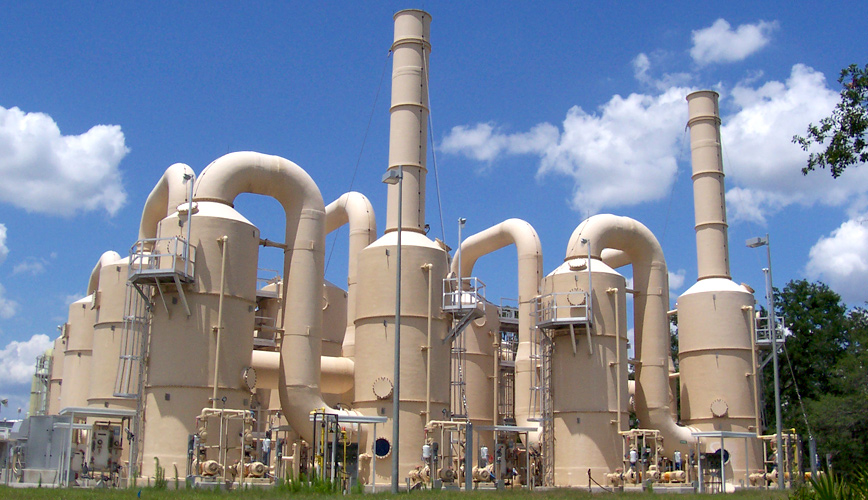
Why Hydro Lancing Matters
Hydro lancing is a high-pressure water cleaning method used to remove fouling, scale, coke, and process deposits from the inside of tubes, pipes, and small-diameter equipment. A technician feeds a flexible lance — a hose fitted with a specialized nozzle — directly into a tube or pipe, where high-pressure water breaks up buildup and flushes it out without abrasive media or chemical solvents.
The reason this matters is simple: fouled equipment costs money in three ways. First, heat transfer drops, so exchangers and boilers burn more fuel to hit the same output. Second, pressure drop increases across fouled tubes, forcing pumps and compressors to work harder. Third, unaddressed fouling eventually forces an unplanned shutdown, which is far more expensive than a scheduled cleaning.
In New Mexico’s Permian Basin, where gas processing plants and compressor stations run around the clock, even a small efficiency loss compounds quickly across hundreds of tubes and thousands of operating hours. Hydro lancing restores equipment to near-original condition, which is why it’s become the standard method for tube-side cleaning ahead of turnarounds, inspections, and recommissioning.
Hydro lancing differs from hydro blasting in scope. Hydro blasting typically refers to surface cleaning of tanks, vessel exteriors, floors, and structural steel using handheld or automated blasting guns. Hydro lancing is more precise — it’s built for tube bundles, small-bore piping, and confined internal passages where a blasting gun can’t reach. Most industrial cleaning providers offer both, and RHI USA does too, but they solve different problems and use different equipment.
Industries We Serve in New Mexico
RHI USA supports the industrial sectors that make up New Mexico’s economy and its footprint along the broader Permian and Delaware Basin region:
- Oil & Gas Production — wellsite equipment, separators, and gathering system components across Lea, Eddy, and Chaves counties
- Gas Processing Plants — the compressor and treating facilities concentrated around Hobbs, Jal, Eunice, and Lovington
- Refineries & Petrochemical Facilities — process units requiring tube-side and vessel cleaning ahead of turnarounds
- Power Generation Plants — condenser and boiler tube cleaning for reliable heat rejection
- Manufacturing Facilities — process equipment cleaning for plants across Albuquerque, Rio Rancho, and Las Cruces
- Water Treatment & Municipal Infrastructure — pipe and tank cleaning for public works and utility operators
- Chemical Processing Plants — pressure vessel and reactor cleaning where fouling affects reaction efficiency
Each of these sectors depends on equipment reliability, and each has its own fouling characteristics — sour gas facilities deal with scale and corrosion byproducts differently than a manufacturing boiler does. Our crews are trained to recognize these differences and adjust pressure, nozzle selection, and lancing technique accordingly.
Equipment Applications
Hydro lancing is effective across the full range of process equipment found in Louisiana’s industrial facilities:
Heat Exchangers and Shell and Tube Exchangers — Tube bundle cleaning is one of the most common hydro lancing applications, removing scale and fouling from individual tubes without damaging tube walls, restoring heat transfer efficiency without a full bundle replacement.
Condensers — Condenser tube cleaning follows the same principle as exchanger tube cleaning, addressing fouling that reduces vacuum performance and condensing efficiency.
Process Piping — Interior scale and deposit removal in process piping, particularly ahead of NDT inspection where an accurate surface reading depends on the pipe being properly cleaned first.
Pressure Vessels — Interior cleaning of vessels where sludge, scale, or process residue has built up, often performed in coordination with confined space entry protocols.
Boilers — Fireside and waterside tube cleaning to maintain thermal efficiency and prevent the kind of scale buildup that leads to localized overheating and tube failure.
Cooling Systems — Cooling tower components, condenser water piping, and related equipment where biological fouling and scale reduce heat rejection efficiency.
Storage Tanks — Tank interior cleaning for sludge and sediment removal, particularly ahead of inspection or when tanks are being returned to service after extended storage.
General Industrial Equipment — Any process equipment where scale, fouling, or sludge buildup is affecting performance or needs to be addressed for inspection purposes.
Hydro Lancing Process
RHI USA’s hydro lancing process follows a consistent sequence designed to deliver a thorough clean while protecting equipment integrity:
- Scope and Method Assessment — Before mobilization, our team reviews the equipment type, known fouling history, and access constraints to confirm hydro lancing is the right method for the job, and to plan pressure settings and lance configuration appropriate to the specific tube or piping material.
- Site Preparation and Safety Planning — This includes confined space entry planning where applicable, water containment and management planning, and coordination with plant safety personnel on permits and isolation requirements before any work begins.
- High-Pressure Water Jetting — Using specialized lancing equipment, high-pressure water is applied directly to interior surfaces — tube bundles, piping runs, vessel interiors — to dislodge scale, fouling, and sludge without damaging base metal.
- Debris Removal and Containment — Removed material is contained and managed according to waste characterization requirements, particularly important for any regulated process residue.
- Post-Cleaning Inspection Support — Where cleaning is being performed ahead of NDT or inspection work, RHI USA coordinates timing and surface condition verification to support accurate inspection results.
- Documentation — Before-and-after condition records, scope performed, and relevant safety documentation are provided to support the facility’s maintenance history and inspection programs.
Benefits of Hydro Lancing
Hydro lancing offers several advantages that make it a preferred method across Louisiana’s industrial base:
- No chemical residue — Water-based cleaning avoids the corrosive residue and disposal considerations that come with some chemical cleaning methods.
- Minimal equipment damage risk — Properly calibrated pressure and lance technique removes fouling without damaging tube walls or piping surfaces.
- Restored heat transfer efficiency — Removing scale and fouling directly improves thermal performance, reducing energy costs tied to fouled equipment.
- Supports accurate inspection — Clean surfaces are essential for reliable NDT and ultrasonic thickness testing results.
- Reduced unplanned downtime — Scheduled hydro lancing as part of a preventive maintenance program reduces the risk of fouling-driven equipment failures between turnarounds.
- Improved equipment reliability — Consistent fouling control extends equipment life and reduces the frequency of more invasive mechanical intervention.
- Faster turnaround compared to chemical soak cleaning — High-pressure water jetting typically clears fouling more quickly than extended chemical soak cycles, which matters when turnaround windows are measured in days rather than weeks.
- Adaptable across equipment types — The same core method scales from small-diameter exchanger tubes to large-diameter process piping and vessel interiors, reducing the need to coordinate multiple specialized contractors for different equipment on the same site.
Equipment We Clean
Hydro lancing is built around tube and pipe geometry, so our work concentrates on:
- Heat exchangers — shell-and-tube units in refining, gas processing, and power generation
- Condensers — surface condensers and air-cooled units where tube-side fouling reduces heat rejection
- Boilers — fire-tube and water-tube boiler cleaning to restore thermal efficiency
- Cooling towers — tube bundles, basins, and distribution piping
- Pipelines and process piping — small to mid-diameter lines carrying process fluids
- Pressure vessels — internal cleaning of reactors, separators, and storage vessels
- Storage tanks — inlet/outlet piping and internal components connected to tank systems
- Industrial vessels — columns, drums, and other process equipment with internal fouling
We also handle tube cleaning for finned-tube exchangers, a common source of airflow restriction in air-cooled units used throughout New Mexico’s gas processing sector, where ambient dust and produced-water scale accelerate fouling rates.
Hydro Lancing Applications
Facility managers call on hydro lancing in a range of scenarios:
Scheduled Turnarounds — Planned outages are the most common use case. Hydro lancing is scheduled ahead of inspection and re-certification so equipment goes back into service clean, at design efficiency, and with an accurate baseline for the next inspection interval.
Plant Shutdown Cleaning — Whether a full plant shutdown or a unit-level outage, hydro lancing removes accumulated fouling before mechanical work begins, giving inspectors a clear view of tube and pipe condition.
Preventive Maintenance — Facilities that track heat exchanger performance over time often schedule lancing on a rotating basis, cleaning a portion of their exchanger fleet each quarter rather than waiting for a full shutdown.
Emergency Shutdowns — When an exchanger fouls faster than expected or a process upset causes rapid scale buildup, RHI USA mobilizes crews quickly to restore equipment before it forces an unplanned outage.
Pre-Inspection Cleaning — API and ASME inspection protocols require clean surfaces for accurate thickness readings and internal visual inspection. Hydro lancing satisfies this requirement without damaging base metal.
Post-Turnaround Verification — After maintenance work, a final lancing pass confirms tubes are clear before a unit is recommissioned and brought back online.
Benefits of Professional Hydro Lancing
- Improved heat transfer efficiency — clean tubes restore thermal performance, cutting fuel and energy costs
- Reduced pressure drop — clear tube-side flow paths mean pumps and compressors run at design load, not overload
- Extended equipment life — regular cleaning prevents the pitting and localized corrosion that untreated fouling accelerates
- Shorter turnaround duration — experienced crews clean faster and more thoroughly, which keeps the overall outage on schedule
- Lower unplanned downtime risk — proactive cleaning catches fouling before it forces an emergency shutdown
- Non-destructive to tube walls — when performed by trained technicians at correct pressure, hydro lancing removes deposits without damaging base metal, unlike mechanical rodding in some applications
- Environmentally cleaner than chemical cleaning — water-based cleaning avoids the solvent handling and disposal requirements that come with chemical descaling
- Accurate inspection readings — clean surfaces give inspectors reliable thickness and condition data
Hydro Lancing Applications
Facility managers call on hydro lancing in a range of scenarios:
Scheduled Turnarounds — Planned outages are the most common use case. Hydro lancing is scheduled ahead of inspection and re-certification so equipment goes back into service clean, at design efficiency, and with an accurate baseline for the next inspection interval.
Plant Shutdown Cleaning — Whether a full plant shutdown or a unit-level outage, hydro lancing removes accumulated fouling before mechanical work begins, giving inspectors a clear view of tube and pipe condition.
Preventive Maintenance — Facilities that track heat exchanger performance over time often schedule lancing on a rotating basis, cleaning a portion of their exchanger fleet each quarter rather than waiting for a full shutdown.
Emergency Shutdowns — When an exchanger fouls faster than expected or a process upset causes rapid scale buildup, RHI USA mobilizes crews quickly to restore equipment before it forces an unplanned outage.
Pre-Inspection Cleaning — API and ASME inspection protocols require clean surfaces for accurate thickness readings and internal visual inspection. Hydro lancing satisfies this requirement without damaging base metal.
Post-Turnaround Verification — After maintenance work, a final lancing pass confirms tubes are clear before a unit is recommissioned and brought back online.
Why Choose RHI USA
Facilities across New Mexico’s industrial corridor choose RHI USA for a few concrete reasons:
Experience with Permian Basin equipment. Our crews understand the fouling patterns common to sour gas service, produced water handling, and the temperature cycling seen in gas processing operations — knowledge that shapes how we approach each job rather than treating every exchanger the same way.
Trained, safety-first crews. Hydro lancing operates at pressures that demand strict procedure. Our technicians are trained on high-pressure water safety, confined space entry, and facility-specific permitting requirements before they step onto a job site.
Turnaround-ready mobilization. We understand that a turnaround schedule doesn’t move for anyone. RHI USA plans crew size, equipment, and shift coverage around the client’s outage window, not the other way around.
Transparent scope and reporting. Clients receive clear documentation of work completed, which supports maintenance planning and inspection records going forward.
Responsive emergency support. When fouling forces an unplanned situation, we prioritize fast mobilization to minimize the financial impact of downtime.
We don’t oversell capacity we don’t have. If a job calls for capabilities outside our scope, we say so upfront — that’s part of operating with real accountability in an industry where trust is earned through consistent, honest performance.
Industrial Areas We Serve Across New Mexico
RHI USA supports facilities throughout New Mexico’s key industrial regions:
Our primary service area covers the southeastern Permian Basin corridor, including Carlsbad, Hobbs, Artesia, Lovington, Jal, and Eunice — the heart of the state’s oil and gas processing activity, home to gas plants, gathering facilities, and the compressor stations that keep production moving.
Further north, we serve Bloomfield and Farmington, supporting the San Juan Basin’s gas processing and power generation infrastructure, and Roswell, where manufacturing and agricultural processing facilities rely on consistent equipment maintenance.
Across central and western New Mexico, RHI USA works with manufacturing and processing facilities in Albuquerque, Rio Rancho, Santa Fe, Las Cruces, Clovis, and Gallup — supporting industrial maintenance programs, scheduled shutdowns, and equipment reliability projects wherever facilities need experienced hydro lancing crews.
Whether your facility sits inside the Permian Basin’s dense oilfield network or elsewhere in New Mexico’s manufacturing and processing landscape, RHI USA can mobilize a crew to your site.
Related Industrial Cleaning Services
Hydro lancing is one part of a broader industrial cleaning scope. RHI USA also provides:
- Heat Exchanger Cleaning — full-service exchanger cleaning covering shell-side and tube-side work
- Industrial Cleaning Services — general facility and equipment cleaning across process industries
- Hydro Lancing Services in Louisiana — supporting Gulf Coast refining and petrochemical operations
- Hydro Lancing Services in Texas — coverage across the Permian Basin’s Texas side and Gulf Coast corridor
- Hydro Lancing Services in Oklahoma — supporting Mid-Continent oil and gas processing facilities
Frequently Asked Questions — Hydro Lancing in New Mexico
What is hydro lancing used for?
Hydro lancing removes scale, fouling, coke, and process deposits from the inside of tubes, pipes, and small-diameter equipment using high-pressure water delivered through a flexible lance. It’s most commonly used on heat exchangers, condensers, boilers, and pressure vessels ahead of inspections and turnarounds.
What's the difference between hydro lancing and hydro blasting?
Hydro lancing targets internal tube and pipe cleaning using a lance fed into small-diameter openings. Hydro blasting targets surfaces — tank exteriors, vessel walls, floors, and structural steel — using handheld or automated blasting guns. Many jobs require both methods on different parts of the same facility.
How often should heat exchangers be hydro lanced?
Cleaning frequency depends on service type, fluid characteristics, and fouling rate. Facilities in sour gas or produced-water service often clean more frequently than clean utility water systems. Most operators schedule lancing to align with turnaround intervals, typically every 12 to 24 months, with additional cleaning if performance data shows efficiency loss sooner.
Is hydro lancing safe for tube walls?
Yes, when performed at correct pressure by trained technicians. Hydro lancing uses water pressure calibrated to the tube material and fouling type, which removes deposits without eroding or thinning the base metal — unlike aggressive mechanical rodding, which can scratch or gouge tube walls if used incorrectly.
How long does a hydro lancing job take?
Duration depends on the number of tubes, fouling severity, and access conditions. A single exchanger might take a few hours, while a full turnaround scope covering dozens of exchangers can run several days. RHI USA provides a time estimate during the scope review before mobilization.
Do you provide emergency hydro lancing services in New Mexico?
Yes. RHI USA mobilizes crews for emergency cleaning when unexpected fouling threatens to force an unplanned shutdown. Response time depends on crew availability and location, but emergency calls are prioritized.
What industries in New Mexico use hydro lancing most?
Oil and gas processing, gas plants, refineries, power generation, and manufacturing facilities represent the bulk of demand, concentrated heavily in the Permian Basin counties of Lea, Eddy, and Chaves, with additional demand from San Juan Basin gas processing and statewide manufacturing.
Can hydro lancing remove hard scales, not just soft fouling?
Yes, though harder scale deposits typically require higher pressure and more passes than soft fouling. During scope review, RHI USA assesses fouling type from prior inspection data or sample tubes to plan pressure settings accordingly.
Does hydro lancing require chemical additives?
No. Hydro lancing is a mechanical cleaning method that uses high-pressure water alone. This avoids the chemical handling, neutralization, and disposal steps required with chemical descaling methods.
How do I get a hydro lancing quote for my facility?
Contact RHI USA with your equipment count, fouling history if available, and target timeline. We’ll schedule a scope review and provide a quote based on tube count, access conditions, and turnaround requirements.
Get a Hydro Lancing Quote for Your New Mexico Facility
Fouled equipment doesn’t wait for a convenient time to become a problem. Whether you’re planning a turnaround, tracking heat exchanger performance, or facing an unexpected efficiency drop, RHI USA is ready to mobilize a trained crew to your New Mexico facility.
Contact RHI USA today to schedule a scope review and get a straightforward quote for your hydro lancing project.